
US Open semifinal: Ben Shelton tops Frances Tiafoe in four sets

The latest stories
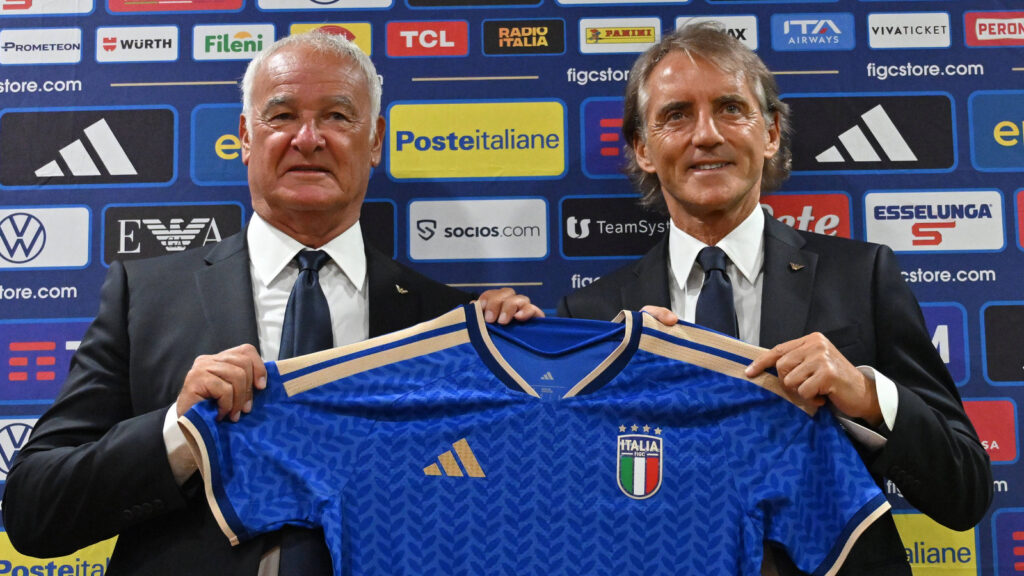
Italy, Nearly 70 Pre-Selections for Mancini: Squad List Announced Tomorrow, Spotlight on a New Generation
17 Sept 2026
Pure Class Raphinha
17 Sept 2026
Serie A has 14 players in the top 50, but only five are Italian
17 Sept 2026
From Robbery to DiaLise: Can Bayern’s new wing duo create their own legacy?
17 Sept 2026
Estudiantes oust Corinthians in Libertadores
17 Sept 2026
Barcelona 7-2 Real Racing Club: Raphinha hat-trick and big numbers
16 Sept 2026
Benfica beat AC Milan 2-0 at San Siro: stats and stars
16 Sept 2026US Open semifinal: Ben Shelton tops Frances Tiafoe in four sets
Ben Shelton beat Frances Tiafoe 4-6, 6-3, 6-3, 7-5 to reach the US Open, Men final at Arthur Ashe Stadium. The No. 8 seed flipped the match after dropping the opener, riding 20 aces and superior return numbers to close out the No. 11 seed in four sets. Overall, Shelton won 128 points to Tiafoe’s 107 and converted five breaks to two. Tiafoe served first, but Shelton’s serve-return balance told the story as the match wore on. You can dig into every stat on the Sofascore match page.
The scoreline and the stage
This was a US Open men’s singles semifinal on outdoor hard court, with Shelton seeded 8 and Tiafoe seeded 11. The final score read 4-6, 6-3, 6-3, 7-5, with Shelton winning 23 games to Tiafoe’s 17. Despite losing the first set, Shelton’s totals were convincing, taking 128 of the 235 points played. That swing aligned with stronger serving volume and a steady rise in return success across sets two, three and four. Both players are American, and both profiles list lofty current rankings, with Shelton at 4 and Tiafoe at 8.
Set times hint at the momentum shifts: the first set lasted about 46 minutes, the second 34, the third 52, and the fourth a grinding 64. As the stakes increased, rallies lengthened and pressure games stacked up. Tiafoe began the match serving, but as the match extended, Shelton made more inroads on return while maintaining a high first-serve base. The scoreboard tightened in the fourth, yet Shelton still found the key late break.
Serving numbers that swung the match
On serve, Shelton’s combination of power and accuracy set the platform. He struck 20 aces to Tiafoe’s 3, kept double faults in check at 3, and landed 75% of first serves compared to Tiafoe’s 57%. First-serve points were nearly a wash at 77% for Shelton and 78% for Tiafoe, which underscores how vital the serve-in rate was. When you land three of every four first serves, life is simpler.
The real serve separator came on second-serve points: Shelton won 54% versus Tiafoe’s 38%. Tiafoe’s second delivery dipped precisely when sets turned. He won 0 of 5 second-serve points in set two, 2 of 10 in set three, and 0 of 4 in set four. Shelton protected his service games more effectively too, taking 18 service games to Tiafoe’s 15 and saving 71% of break points against him (5 of 7). Tiafoe saved 6 of 11 (54%), but that five-break total conceded gave Shelton the cushion he needed.
Return performance and the pressure points
Shelton’s return game grew across the match. He won 47 receiver points to Tiafoe’s 33 overall, and he punished second serves with a 61% success rate (32 of 52). Tiafoe managed 46% on second-serve returns (13 of 28), a respectable mark, yet it trailed Shelton’s pressure output. On first-serve returns, both were similar across the match, with Tiafoe at 23% and Shelton at 21%, but the later sets flipped that narrative.
Look at the clutch figures to see the difference. Shelton converted 5 break points, Tiafoe 2. In the fourth set alone, Shelton saved all 3 break points he faced and converted the single break he needed. Across the key middle stanza, set three, Shelton won 20 return points to just 5 for Tiafoe, including 8 of 10 on second-serve returns. Even when Tiafoe created chances, Shelton’s 5-of-7 break-point saving rate kept the scoreboard under control.
Winners, errors and shot patterns
Shotmaking leaned Shelton’s way in volume. He racked up 42 total winners to Tiafoe’s 26 and spread them well, with 11 coming off the backhand wing compared to Tiafoe’s 2. Tiafoe actually led forehand winners 21 to 11, showing his forehand was the single biggest finishing shot on court. But Shelton’s balance, backed by the serve, widened the scoreboard.
Error counts add context. Total errors were close, with Tiafoe at 55 and Shelton at 50, yet Shelton’s unforced errors were slightly higher at 31 versus Tiafoe’s 28. That still worked for him because the trade-off came with far more winners. Groundstroke errors were tight too, 49 for Shelton to 52 for Tiafoe, indicating extended exchanges that often ended on Shelton’s terms. Volley winners were few and split, with Tiafoe at 3 and Shelton at 1, reflecting a match dictated primarily from the baseline and behind big first serves.
Set-by-set flow and key swings
Set 1 went to Tiafoe 6-4 on the back of a superb 89% first-serve rate and sharper returns. He won 12 receiver points to Shelton’s 7, grabbed the lone break he needed, and faced no break points on his own serve. Shelton still served well, but Tiafoe’s early rhythm on return nudged the opener his way in roughly 46 minutes.
Set 2 flipped quickly: Shelton took it 6-3 with 5 aces, 88% first serves in, and 71% first-serve points won. Crucially, Tiafoe won 0 of 5 points behind his second serve and saved 0 of 2 break points faced. Shelton added 17 service points and 9 return points in the set and never looked rushed, wrapping it in around 34 minutes.
Set 3 again finished 6-3 for Shelton, and the return numbers were emphatic. He won 20 receiver points to Tiafoe’s 5, going 8 of 10 on second-serve return points and 12 of 32 on first-serve return points. Tiafoe saved 5 of 7 break points in that set, but the constant pressure still produced two breaks. Shelton’s run of 8 straight points there matched the match-best streak and underlined the shift in momentum during a 52-minute stanza.
Set 4, the longest at about 64 minutes, played out on a knife’s edge. Both men landed 88–89% of first serves, but Shelton added 8 aces and won 78% of first-serve points. Tiafoe’s second serve again offered little margin, yielding 0 of 4 points. Shelton saved all 3 break points he faced and converted his single chance to close 7-5, finishing with 27 service points and 11 return points in the set.
What this win says about Shelton’s semifinal
This was a serve-and-return blueprint built for hard courts. Shelton combined a heavy first ball with enough second-serve security to keep scorelines tidy, then used aggressive second-serve returning to turn games in his favor. The gap in aces (20 to 3), first-serve percentage (75% to 57%), and second-serve points won (54% to 38%) explains not just the comeback, but the cushion on the final tally.
With the 4-6, 6-3, 6-3, 7-5 win, Shelton advances to the US Open final. For a deeper stat dive, including point-by-point and the Sofascore Rating for both players, head to Sofascore. It’s the quickest way to revisit every swing, track momentum, and compare the numbers that shaped this semifinal.
 US Open, Men


The latest stories
Italy, Nearly 70 Pre-Selections for Mancini: Squad List Announced Tomorrow, Spotlight on a New Generation
17 Sept 2026Pure Class Raphinha
17 Sept 2026Serie A has 14 players in the top 50, but only five are Italian
17 Sept 2026From Robbery to DiaLise: Can Bayern’s new wing duo create their own legacy?
17 Sept 2026Estudiantes oust Corinthians in Libertadores
17 Sept 2026Barcelona 7-2 Real Racing Club: Raphinha hat-trick and big numbers
16 Sept 2026
Ben Shelton beat Frances Tiafoe 4-6, 6-3, 6-3, 7-5 to reach the US Open, Men final at Arthur Ashe Stadium. The No. 8 seed flipped the match after dropping the opener, riding 20 aces and superior return numbers to close out the No. 11 seed in four sets. Overall, Shelton won 128 points to Tiafoe’s 107 and converted five breaks to two. Tiafoe served first, but Shelton’s serve-return balance told the story as the match wore on. You can dig into every stat on the Sofascore match page.
The scoreline and the stage
This was a US Open men’s singles semifinal on outdoor hard court, with Shelton seeded 8 and Tiafoe seeded 11. The final score read 4-6, 6-3, 6-3, 7-5, with Shelton winning 23 games to Tiafoe’s 17. Despite losing the first set, Shelton’s totals were convincing, taking 128 of the 235 points played. That swing aligned with stronger serving volume and a steady rise in return success across sets two, three and four. Both players are American, and both profiles list lofty current rankings, with Shelton at 4 and Tiafoe at 8.
Set times hint at the momentum shifts: the first set lasted about 46 minutes, the second 34, the third 52, and the fourth a grinding 64. As the stakes increased, rallies lengthened and pressure games stacked up. Tiafoe began the match serving, but as the match extended, Shelton made more inroads on return while maintaining a high first-serve base. The scoreboard tightened in the fourth, yet Shelton still found the key late break.
Serving numbers that swung the match
On serve, Shelton’s combination of power and accuracy set the platform. He struck 20 aces to Tiafoe’s 3, kept double faults in check at 3, and landed 75% of first serves compared to Tiafoe’s 57%. First-serve points were nearly a wash at 77% for Shelton and 78% for Tiafoe, which underscores how vital the serve-in rate was. When you land three of every four first serves, life is simpler.
The real serve separator came on second-serve points: Shelton won 54% versus Tiafoe’s 38%. Tiafoe’s second delivery dipped precisely when sets turned. He won 0 of 5 second-serve points in set two, 2 of 10 in set three, and 0 of 4 in set four. Shelton protected his service games more effectively too, taking 18 service games to Tiafoe’s 15 and saving 71% of break points against him (5 of 7). Tiafoe saved 6 of 11 (54%), but that five-break total conceded gave Shelton the cushion he needed.
Return performance and the pressure points
Shelton’s return game grew across the match. He won 47 receiver points to Tiafoe’s 33 overall, and he punished second serves with a 61% success rate (32 of 52). Tiafoe managed 46% on second-serve returns (13 of 28), a respectable mark, yet it trailed Shelton’s pressure output. On first-serve returns, both were similar across the match, with Tiafoe at 23% and Shelton at 21%, but the later sets flipped that narrative.
Look at the clutch figures to see the difference. Shelton converted 5 break points, Tiafoe 2. In the fourth set alone, Shelton saved all 3 break points he faced and converted the single break he needed. Across the key middle stanza, set three, Shelton won 20 return points to just 5 for Tiafoe, including 8 of 10 on second-serve returns. Even when Tiafoe created chances, Shelton’s 5-of-7 break-point saving rate kept the scoreboard under control.
Winners, errors and shot patterns
Shotmaking leaned Shelton’s way in volume. He racked up 42 total winners to Tiafoe’s 26 and spread them well, with 11 coming off the backhand wing compared to Tiafoe’s 2. Tiafoe actually led forehand winners 21 to 11, showing his forehand was the single biggest finishing shot on court. But Shelton’s balance, backed by the serve, widened the scoreboard.
Error counts add context. Total errors were close, with Tiafoe at 55 and Shelton at 50, yet Shelton’s unforced errors were slightly higher at 31 versus Tiafoe’s 28. That still worked for him because the trade-off came with far more winners. Groundstroke errors were tight too, 49 for Shelton to 52 for Tiafoe, indicating extended exchanges that often ended on Shelton’s terms. Volley winners were few and split, with Tiafoe at 3 and Shelton at 1, reflecting a match dictated primarily from the baseline and behind big first serves.
Set-by-set flow and key swings
Set 1 went to Tiafoe 6-4 on the back of a superb 89% first-serve rate and sharper returns. He won 12 receiver points to Shelton’s 7, grabbed the lone break he needed, and faced no break points on his own serve. Shelton still served well, but Tiafoe’s early rhythm on return nudged the opener his way in roughly 46 minutes.
Set 2 flipped quickly: Shelton took it 6-3 with 5 aces, 88% first serves in, and 71% first-serve points won. Crucially, Tiafoe won 0 of 5 points behind his second serve and saved 0 of 2 break points faced. Shelton added 17 service points and 9 return points in the set and never looked rushed, wrapping it in around 34 minutes.
Set 3 again finished 6-3 for Shelton, and the return numbers were emphatic. He won 20 receiver points to Tiafoe’s 5, going 8 of 10 on second-serve return points and 12 of 32 on first-serve return points. Tiafoe saved 5 of 7 break points in that set, but the constant pressure still produced two breaks. Shelton’s run of 8 straight points there matched the match-best streak and underlined the shift in momentum during a 52-minute stanza.
Set 4, the longest at about 64 minutes, played out on a knife’s edge. Both men landed 88–89% of first serves, but Shelton added 8 aces and won 78% of first-serve points. Tiafoe’s second serve again offered little margin, yielding 0 of 4 points. Shelton saved all 3 break points he faced and converted his single chance to close 7-5, finishing with 27 service points and 11 return points in the set.
What this win says about Shelton’s semifinal
This was a serve-and-return blueprint built for hard courts. Shelton combined a heavy first ball with enough second-serve security to keep scorelines tidy, then used aggressive second-serve returning to turn games in his favor. The gap in aces (20 to 3), first-serve percentage (75% to 57%), and second-serve points won (54% to 38%) explains not just the comeback, but the cushion on the final tally.
With the 4-6, 6-3, 6-3, 7-5 win, Shelton advances to the US Open final. For a deeper stat dive, including point-by-point and the Sofascore Rating for both players, head to Sofascore. It’s the quickest way to revisit every swing, track momentum, and compare the numbers that shaped this semifinal.