
Draymond Green’s Warriors extension: what it means for next season

The latest stories
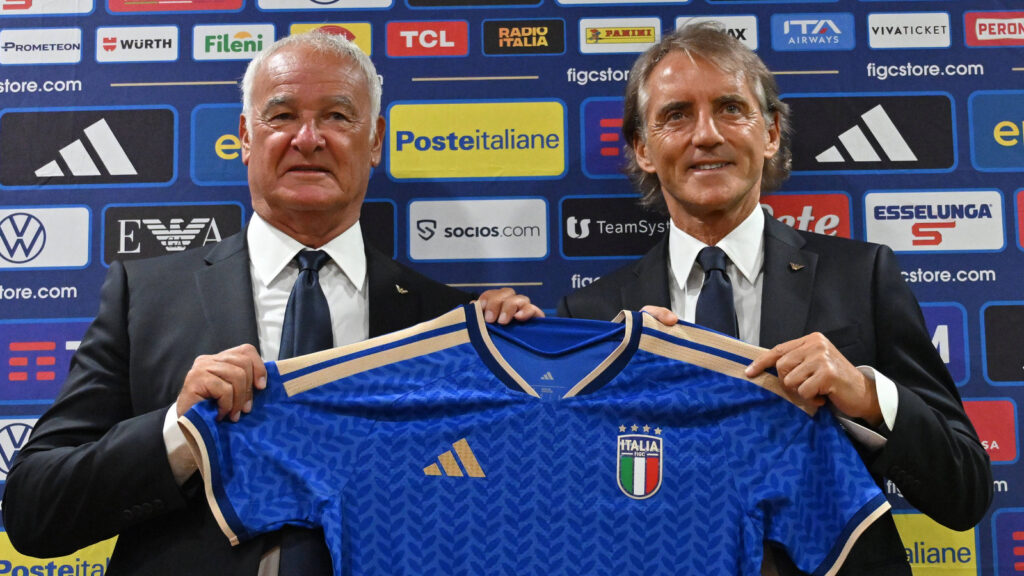
Italy, Nearly 70 Pre-Selections for Mancini: Squad List Announced Tomorrow, Spotlight on a New Generation
17 Sept 2026
Pure Class Raphinha
17 Sept 2026
Serie A has 14 players in the top 50, but only five are Italian
17 Sept 2026
From Robbery to DiaLise: Can Bayern’s new wing duo create their own legacy?
17 Sept 2026
Estudiantes oust Corinthians in Libertadores
17 Sept 2026
Barcelona 7-2 Real Racing Club: Raphinha hat-trick and big numbers
16 Sept 2026
Benfica beat AC Milan 2-0 at San Siro: stats and stars
16 Sept 2026Draymond Green’s Warriors extension: what it means for next season
Draymond Green has officially extended his contract with the Golden State Warriors. That quiets the departure chatter and locks in the franchise’s most vocal organizer on both ends. Sofascore’s player page lists him at 198 cm and 104 kg, a profile that still fits the team’s switchable frontcourt needs. The deal keeps him under contract into 2027, which stabilizes the roster timeline and the rotation.
From a production lens, his 2025/26 regular season shows a steady impact. Green’s Average Sofascore Rating sits at 6.83 out of 10, with late-season games landing between 6.4 and 8.0. That stretch included 7.3 vs Nuggets on March 30, 7.0 vs Spurs on April 2, 7.4 vs Cavaliers on April 3, and a season-best 8.0 vs Rockets on April 6. He then posted 6.7 and 6.8 in two April meetings with the Kings, and 6.4 vs Lakers on April 10, a snapshot of his night-to-night baseline.
Why keeping Green matters now
Continuity matters when your offense relies on reads and timing. Green has long served as the connective passer who gets teammates into their spots, and the data-backed steadiness of a 6.83 Sofascore Rating supports that view. A perfect Sofascore Rating is 10, so his season mark points to reliable two-way value rather than flashy scoring lines. For a Warriors group that depends on movement, he is the natural hub.
This extension also protects minutes distribution. Green’s primary position is PF, and keeping him removes a potential hole in the defensive matchup chart. It means the Warriors do not need to fast-track a replacement or overhaul their frontcourt schemes. With No. 23 returning, the structure stays intact and the depth chart breathes easier.
Tactical ripple effects in the Warriors system

Green’s shot profile says plenty about how the offense can flow. The season shotmap shows heavy touches around the top of the arc and the restricted area, which fits his handoff-and-dive game. He converted 60.2% in the central restricted zone and 60.0% from the right dunker spot, efficient areas that reward quick slips and short rolls. Those numbers encourage more actions that spring cutters and shooters while letting Green finish when the lane opens.
Spacing choices are just as clear. He hit 43.9% from the right corner three and 33.3% from the left corner, with 0.0% recorded on one of the wing zones in this sample. Mid-range accuracy was lower at 21.3% on the left, 37.5% in the middle, and 27.7% on the right. The takeaway is simple. Let him live at the rim, keep the right corner available, and avoid mid-range isolations unless the clock forces it.
What the Sofascore data says about his shot profile
The heatmap confirms his preferred lanes. There is a bright cluster at the rim and consistent activity around the arc, the classic blueprint of a facilitating forward. That aligns with his role as a decision-maker who toggles between screening, passing, and finishing. When defenses help, his kickouts punish rotations. When they stay home, his 60% finishing in close rewards the choice to keep feeding the paint.
Game-to-game Ratings add context to how those reads translate. The 8.0 Sofascore Rating vs Rockets on April 6 underlines the ceiling when the playmaking clicks. Ratings of 7.0 to 7.4 around that date show his typical level against varied opponents. The 6.4 vs Lakers and two Kings meetings in the 6.7 to 6.8 range show his floor. For a rotation anchor, that range is valuable because it supports consistent schemes.
Locker room value and on-court communication
Chemistry is never just a buzzword with Green. He is the loudest problem-solver on the court, and that voice sets coverages, matchups, and tempo. Keeping him removes uncertainty and keeps the vocabulary of the defense intact. The alternative would have been teaching a new anchor the team’s language, which costs time in an NBA season.
The extension also signals trust. With a listed salary of 25,892,857 USD and a contract running into 2027, the franchise has tied continuity to accountability. That stability helps young players understand their roles next to a veteran forward. It also gives coaches a familiar lever to pull when games tighten and details decide outcomes.
How this shapes the Warriors’ title hopes
Championship windows depend on star quality and the glue that binds it. Green is that glue in Golden State’s scheme. His 2025/26 Sofascore Rating of 6.83 is not headline-chasing, but it pairs with elite processing and the right shot map for playoff basketball. Efficient rim finishing and a reliable right-corner three help under pressure, when possessions slow and easy points are scarce.
The team’s late-season Ratings run hints at a stable form line entering the postseason. When Green posts nights in the 7.0 to 8.0 range, the Warriors usually look organized. With his contract extended, the next step is optimizing spacing to keep him in those high-impact zones. Do that, and the Warriors’ NBA title case gets the continuity boost it needed.
Pros and cons of re-signing Draymond Green
Pros
- System fit remains intact, avoiding a major tactical reset.
- Proven consistency with a 6.83 Sofascore Rating in 2025/26.
- Efficient finishing zones at 60.2% in the restricted area and 60.0% from the right dunker spot.
- Reliable right-corner spacing at 43.9% helps shooters and driving lanes.
- Leadership and communication stabilize rotations and defensive assignments.
- Contract security into 2027 provides planning clarity for roster building.
Cons
- Mid-range efficiency is modest at 21.3% left and 27.7% right, limiting late-clock options.
- Left-corner three at 33.3% and a 0.0% wing zone reduce flexibility on some alignments.
- Maintaining top form across a long season is a constant demand given his workload.
- Salary slot is significant, which tightens cap choices around the margins.

The latest stories
Italy, Nearly 70 Pre-Selections for Mancini: Squad List Announced Tomorrow, Spotlight on a New Generation
17 Sept 2026Pure Class Raphinha
17 Sept 2026Serie A has 14 players in the top 50, but only five are Italian
17 Sept 2026From Robbery to DiaLise: Can Bayern’s new wing duo create their own legacy?
17 Sept 2026Estudiantes oust Corinthians in Libertadores
17 Sept 2026Barcelona 7-2 Real Racing Club: Raphinha hat-trick and big numbers
16 Sept 2026
Draymond Green has officially extended his contract with the Golden State Warriors. That quiets the departure chatter and locks in the franchise’s most vocal organizer on both ends. Sofascore’s player page lists him at 198 cm and 104 kg, a profile that still fits the team’s switchable frontcourt needs. The deal keeps him under contract into 2027, which stabilizes the roster timeline and the rotation.
From a production lens, his 2025/26 regular season shows a steady impact. Green’s Average Sofascore Rating sits at 6.83 out of 10, with late-season games landing between 6.4 and 8.0. That stretch included 7.3 vs Nuggets on March 30, 7.0 vs Spurs on April 2, 7.4 vs Cavaliers on April 3, and a season-best 8.0 vs Rockets on April 6. He then posted 6.7 and 6.8 in two April meetings with the Kings, and 6.4 vs Lakers on April 10, a snapshot of his night-to-night baseline.
Why keeping Green matters now
Continuity matters when your offense relies on reads and timing. Green has long served as the connective passer who gets teammates into their spots, and the data-backed steadiness of a 6.83 Sofascore Rating supports that view. A perfect Sofascore Rating is 10, so his season mark points to reliable two-way value rather than flashy scoring lines. For a Warriors group that depends on movement, he is the natural hub.
This extension also protects minutes distribution. Green’s primary position is PF, and keeping him removes a potential hole in the defensive matchup chart. It means the Warriors do not need to fast-track a replacement or overhaul their frontcourt schemes. With No. 23 returning, the structure stays intact and the depth chart breathes easier.
Tactical ripple effects in the Warriors system
Green’s shot profile says plenty about how the offense can flow. The season shotmap shows heavy touches around the top of the arc and the restricted area, which fits his handoff-and-dive game. He converted 60.2% in the central restricted zone and 60.0% from the right dunker spot, efficient areas that reward quick slips and short rolls. Those numbers encourage more actions that spring cutters and shooters while letting Green finish when the lane opens.
Spacing choices are just as clear. He hit 43.9% from the right corner three and 33.3% from the left corner, with 0.0% recorded on one of the wing zones in this sample. Mid-range accuracy was lower at 21.3% on the left, 37.5% in the middle, and 27.7% on the right. The takeaway is simple. Let him live at the rim, keep the right corner available, and avoid mid-range isolations unless the clock forces it.
What the Sofascore data says about his shot profile
The heatmap confirms his preferred lanes. There is a bright cluster at the rim and consistent activity around the arc, the classic blueprint of a facilitating forward. That aligns with his role as a decision-maker who toggles between screening, passing, and finishing. When defenses help, his kickouts punish rotations. When they stay home, his 60% finishing in close rewards the choice to keep feeding the paint.
Game-to-game Ratings add context to how those reads translate. The 8.0 Sofascore Rating vs Rockets on April 6 underlines the ceiling when the playmaking clicks. Ratings of 7.0 to 7.4 around that date show his typical level against varied opponents. The 6.4 vs Lakers and two Kings meetings in the 6.7 to 6.8 range show his floor. For a rotation anchor, that range is valuable because it supports consistent schemes.
Locker room value and on-court communication
Chemistry is never just a buzzword with Green. He is the loudest problem-solver on the court, and that voice sets coverages, matchups, and tempo. Keeping him removes uncertainty and keeps the vocabulary of the defense intact. The alternative would have been teaching a new anchor the team’s language, which costs time in an NBA season.
The extension also signals trust. With a listed salary of 25,892,857 USD and a contract running into 2027, the franchise has tied continuity to accountability. That stability helps young players understand their roles next to a veteran forward. It also gives coaches a familiar lever to pull when games tighten and details decide outcomes.
How this shapes the Warriors’ title hopes
Championship windows depend on star quality and the glue that binds it. Green is that glue in Golden State’s scheme. His 2025/26 Sofascore Rating of 6.83 is not headline-chasing, but it pairs with elite processing and the right shot map for playoff basketball. Efficient rim finishing and a reliable right-corner three help under pressure, when possessions slow and easy points are scarce.
The team’s late-season Ratings run hints at a stable form line entering the postseason. When Green posts nights in the 7.0 to 8.0 range, the Warriors usually look organized. With his contract extended, the next step is optimizing spacing to keep him in those high-impact zones. Do that, and the Warriors’ NBA title case gets the continuity boost it needed.
Pros and cons of re-signing Draymond Green
Pros
Cons